
END YEAR IMPACT (JULY - DEC 2025) NEWSLETTER


BADILI FLOW FILM AND MUSIC

1. LAUNCH.
As part of the task, Badili Flow is a product of the Pamoja Tudumishe Elimu project
funded by WeWorld and implemented by YAI. This product was set in the form of both a documentary and a music piece for scantling lived experience about Menstrual Hygiene. Both the documentary and the music capture the challenges, lived realities, pressing questions, solutions, and impact surrounding menstruation. They serve as powerful tools to communicate with diverse audiences, including young girls and boys, teachers, parents, community members, and decision-makers on how to cut off menstrual stigma.
SCHOOL AND COMMUNITY DISSEMINATION.
Badili Flow, produced by YAI, involving a Menstrual Hygiene Expert, was launched by YAI at Nafasi Space, Dar es Salaam, on 17 September 2025, attended by young girls and boys, teachers, parents, community members, and decision-makers.

Its dissemination reached 10 primary schools, engaged 20 teachers, 822 pupils, 357 male 465 female of Dar es Salaam region in Temeke and Kinondoni districts, and at the community level disseminated at Temeke district kijichi ward with a each of 60male and 40female. Through social media engagement, 370,857 people interacted with the post.
3. ONLINE DISSEMINATION
We use influencers and organizations' social media platform you watch the film in our YouTube channel through the link below.

ORASS PROJECT OFFICIALLY LAUNCHED IN TANZANIA
The Obstacle Race Against Stigma and Shame (ORASS) Project was officially launched on 11th September 2025 at Sea Shells Millennium Towers, Dar es Salaam, a project in partnership with Young and Alive Initiative (YAI) and Community Consortium.

The launch brought together 63 participants, including government representatives, schoolteachers, students, partners, and media to discuss ways to reduce mental health stigma in schools and communities.
The Guest of Honor (Ernest Hinju, Assistant Director of Tamisemi) commended the initiative and emphasized the importance of mental health education in improving students’ well-being and academic success.

ORASS PROJECT WILL BE IMPLEMENTED IN DAR ES SALAAM (KIJITONYA KISIWANI SCHOOL, MTAKUJA BEACH SEKONDAR SCHOOL, MTAKUJA PRIMARY SCHOOL), MBEYA (SINDE SECONDARY SCHOOL), AND TABORA (MIGUWA SECONDARY SCHOOL), FOCUSING ON MENTAL HEALTH LITERACY, STIGMA REDUCTION, AND YOUTH EMPOWERMENT THROUGH INTERACTIVE SCHOOL AND COMMUNITY ACTIVITIES.
Following the launch, orientation sessions will be conducted for teachers, parents, and students, alongside the translation of project materials into Kiswahili to enhance accessibility. The event concluded with a call to action for continued collaboration among stakeholders to ensure the project’s success and long-term community impact.
First phase of School Implementation of ORASS

(Source: Migua Secondary School, Tabora)

(Source: Kijitonyama Kisiwani primary, Dar - es - Salaam)
Baseline Assessment at Kijitonyama Kisiwani Primary School
Young & Alive initiative in partnership with Community Consortium Uganda, through data enumerators, conducted a baseline survey at Kijitonyama Kiswani Primary School that took place from 20 to 25 November 2025 to better understand students’ knowledge, attitudes, literacy rate, and perceptions from the community, teachers, and students on mental health stigma. During this exercise, the targeted students were both girls and boys from 10 to 24 years. Whereby a total of 422 (214 girls, 208 boys) were interviewed.

The purpose of the survey was to assess existing levels of knowledge, attitudes, and perceptions related to mental health among students, teachers, and wider school community, identification of existing misconceptions, stigmatization, and the barriers that hinder students from seeking support for mental health challenges. prior to the implementation of targeted interventions. The data gathered serve as a benchmark against which future progress can be measured and provide critical insights for designing evidence-based interventions tailored to the school’s specific needs.
To make the session more relaxed and interactive, the baseline team also held a short game activity designed to help students and facilitators connect more openly. The baseline has provided valuable insights into the students’ current understanding of mental health and has highlighted opportunities for continued learning and support within the school community.
BINTI IMARA.

The second phase of the Binti Imara program featured two community dialogues conducted in two wards under the Aya Ludewa District Council in the Njombe Region.
These dialogues were led by AGYWs trained in the previous year, ensuring that young people’s voices and perspectives guided the conversations. These sessions brought together 40 people from diverse groups, including parents, district level health professionals, medical and nursing/midwifery students, as well as AGYWs.
Through open discussions that promoted transparency and equal participation of youth in the fight against AIDS, participants exchanged ideas on how young people can engage in the existing response systems. They also shared their views on effective ways to enhance youth involvement and strengthen the fight, ensuring that implementation is guided by youth-driven suggestions and solutions.
One of the key positive outcomes from these community dialogues was the commitment from the district HIV coordinator to nominate two young people to join the regional HIV steering committee. This step aims to ensure that youth voices are represented at both decision-making and planning levels. It is anticipated that this opportunity will empower the two young representatives to effectively advocate for their peers within the community. Additionally, a strategic plan was developed to establish a health club at Lugarawa Health Training Institute [LUHETI], providing student doctors with a platform to organize more dialogues with community members both within the college and in neighboring villages.
YOUNG MOTHERS (WAMAMA WADOGO).
Ten young women from the Makete and Ludewa districts came together for a two-day training session focused on financial literacy, leadership for personal development, and issues related to gender-based violence. This gathering continued the effort to create a supportive and friendly environment where these young mothers can connect, learn from one another, and build confidence in the process of obtaining resilience and collective voice and power.

1st YOUNG MOTHERS CONVENING IN KENYA.

Eight young mothers from Makete, Ludewa, and Mbagala got the chance to attend the 1st ever young mothers convening in Kenya, where they met with other young mothers from both Kenya and Tanzania. At the convening, the YM had the chance to exchange knowledge, experience and they together drafted a manifesto directed to governments, parents, friends, and other young mothers as a collective
YOUNG MOTHERS TRAINING 26 NOV- 29 NOV
Day one Young Mothers Training Project opened a new chapter of learning, building confidence, and strengthening the understanding of health and rights for young women. Participants, who are young mothers from Mbagala, gathered together, sharing their life stories, challenges, and motherhood journeys.
Through in-depth discussions and attentive listening, participants had the opportunity to reflect and recognize the importance of owning, understanding, and presenting their stories courageously. The safe and loving environment made them feel free to express themselves, thus enhancing social and emotional resilience.

Day one: The Young Mothers Training Project opened a new chapter of learning, building confidence, and strengthening the understanding of health and rights for young women. Participants, who are young mothers from Mbagala, gathered together, sharing their life stories, challenges, and motherhood journeys.
Through in-depth discussions and attentive listening, participants had the opportunity to reflect and recognize the importance of owning, understanding, and presenting their stories courageously. The safe and loving environment made them feel free to express themselves, thus enhancing social and emotional resilience.
Day Two: The Young Mother’s financial literacy aims to build a deep Understanding of how to manage, plan, and grow their business in a sustainable and impactful way, while also enhancing their capacity through targeted skills and knowledge development.
EVENTS / MEETINGS
STRENGTHENING SRHR PROGRAMS THROUGH COMMUNITY-LED MONITORING (CLM)
As part of our continued commitment to strengthening Sexual and Reproductive Health and Rights (SRHR) initiatives, a specialized training was conducted focusing on the integration of Community-Led Monitoring approach (CLM) within SRHR programs.
The training brought together non-governmental organizations (NGOs) working in SRHR to build their capacity in embedding CLM approaches across their projects. The goal was to promote sustainability and community ownership, ensuring that communities are empowered to identify and address their own challenges even after project timelines come to an end.
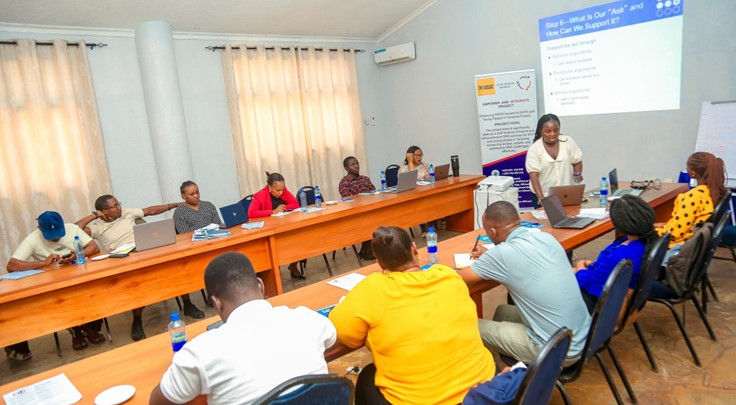
Through interactive sessions, participants explored practical strategies for:
Integrating CLM tools into ongoing SRHR interventions.
Strengthening accountability and feedback mechanisms.
Enhancing collaboration between communities and implementing partners.
This training reaffirmed our shared vision of ensuring that SRHR programs remain inclusive, responsive, and community-centered for project sustainability. Also, generating evidence based on the SRHR advocacy campaign.
YOUNG AND ALIVE INITIATIVE AT THE ICFP.
Bogotá, Colombia | 3–6 November 2025

Young and Alive Initiative (YAI) proudly participated in this year’s International Conference on Family Planning, held in Bogotá, Colombia. Engaging in crucial discussions in Safeguarding Sexual Reproductive Health and Rights (SRHR) for All. Represented by our CEO of Young and Alive Initiative, with a young champion leader nurtured through the Young and Alive Summit.
Their presence underscores YAI’s continued investment in building strong, informed, and impactful youth leadership at national and global levels. The conference brought together thousands of global leaders, advocates, youth champions, and partners. At ICFP 2025, leaders, experts, advocates, youth champions, partners, and practitioners from across the world were together sharing ideas, innovations, and lessons learned.
SESSION SPOTLIGHT
Strengthening Partnerships and Elevating Youth Leadership.

As Chair of the IBP Network, YAI also led a key session focused on strengthening partnerships, supporting evidence-based programming, and amplifying youth voices in decision-making spaces.


On November 6, Young and Alive, engaging the powerful plenary of leaders exploring how to communicate effectively in today’s polarized environment. The conversation emphasized the importance of authenticity, co-creation, and meaningful engagement with young people. During the panel session, our leaders highlighted that authentic and transparent communication is essential for building trust.
They also emphasized that youth engagement must be intentional, with messages
co-created to reflect young people’s real experiences and voices. In addition, underscored experiences and voices. In addition, the discussion underscored that effective collaboration relies on shared power and genuine joint leadership.
STAKEHOLDERS TRAINING NEEDS ASSESSMENT WORKSHOP ON CLIMATE CHANGE, GENDER, AND HEALTH
The training was organized by Climate Action Networks Tanzania (CAN) under a project titled “Strengthening Local CSOs’ Voices for Climate-Resilient Health Systems in Tanzania”. Funded by the Commonwealth Foundation. The training aimed to enhance the capacity of local Civil Society Organizations (CSOs) in Tanzania Mainland and Zanzibar to engage in climate change, gender, and health advocacy, to promote equitable, climate-resilient health systems through constructive engagement with government officials (policymakers).

From the training YAI participated in and learned the foundation for the development of a gender-responsive climate & health advocacy, local actors’ technical knowledge, advocacy skills, and coordination mechanisms in responding to the growing health impacts of climate change, particularly among women, children, youth, people with disabilities, and other vulnerable groups. Also, integrating climate change when developing different gender and health programs. Attached link for pictures during training.
YAI RETREAT
Young and Alive Initiative (YAI) conducted a Staff Retreat from 30 November to 5 December 2025 in Morogoro at Nguzo Camp with the aim of strengthening team cohesion, enhancing internal systems, and improving overall organizational effectiveness. The retreat provided a shared platform for staff to learn, reflect, and exchange experiences while critically assessing institutional performance at individual, departmental, and organizational levels. Through sessions on human resources, departmental gap analysis, and staff wellbeing, the retreat focused on building a values-driven, accountable, and resilient organization capable of delivering sustainable impact.

Day One and Day Two (1–2 December 2025): Human Resource (HR) Session
The Human Resource (HR) session, facilitated by Grayson Mapunda, aimed to provide staff with a clear understanding of organizational policies, strategic direction, and ethical standards. The session was conducted in an interactive format, allowing staff to actively participate by sharing their expectations. Key expectations raised included clarity on HR policies, transparent communication, opportunities for professional development, and the promotion of a positive and inclusive work environment.

The session covered an overview of Young and Alive Initiative (YAI) policies, with a focus on the organization’s history, mission, vision, core values, and strategic objectives. These elements were discussed in relation to how they guide daily operations and ensure long- term sustainability. In addition, the facilitator presented YAI’s Strategic Vision 2030, highlighting priority areas such as youth leadership, SRHR services, sexuality education, mental health, and the need to strengthen internal capacity to achieve sustainable impact.
A comprehensive review of the Code of Ethical Conduct was also provided, emphasizing child protection, anti-trafficking measures, prevention of bullying and harassment, and non-discrimination. Staff were reminded that adherence to ethical standards is essential for accountability, professionalism, and maintaining a safe, respectful, and supportive workplace.

Day 03: Start with Team Reflection, then Departmental Gap Identification.
The session focused on identifying departmental gaps to strengthen internal systems and improve overall organizational performance. The session provided a structured platform for departments to assess their operations, document existing gaps, and recognize available opportunities. including all Key departments Programs/ERL, Resource Mobilization, Administration, and Finance, conducted in-depth reviews of their processes, systems, and resources. The discussions highlighted gaps related to planning, coordination, infrastructure, documentation, and financial processes, which directly affect efficiency and service delivery.

Day 04: Start with the hiking experience at Choma waterfalls was an exciting and refreshing experience that combined physical exercise with the beauty of nature. Participants enjoyed the challenge of the trail while taking in the stunning view of the waterfalls and the surrounding landscape. Followed by Team Reflection on Self-Care and Emotional Intelligence:
The session focused on helping staff understand the importance of self-care, emotional intelligence, coping, and resilience in both personal life and the workplace. Participants reflected on how they take care of themselves and acknowledged that self- care practices differ from one person to another. Emphasis was placed on recognizing personal burnout, practicing work–life harmony, and intentionally caring for spiritual, emotional, and physical well-being.
The facilitator highlighted the role of mentorship, coaching, and psychological support in strengthening individual resilience. Emotional intelligence was also discussed, with a focus on self-awareness and self-regulation, particularly identifying and managing emotional triggers to improve communication and teamwork. The session concluded with a call for continuous self-reflection, healthy coping, and intentional well-being as part of a supportive work culture.


Started using this game recently just to see what it offers. At first it felt confusing and I didn’t enjoy it. After playing for some time, I started understanding it better. Now I open it sometimes when I feel bored. It works smoothly on my phone without any issues. I don’t play daily. It’s not something amazing, but still okay for casual use and simple time pass when needed.
Jio lottery apk